

Second grade. Mrs. Orhiner is standing in the doorway talking to my mother, and I am close enough to hear every word. She says I write like I’m telling a story out loud. She says she can hear my voice on the page. She says, someday, “this one might be an author”.
I didn’t know what an author actually did for a living. I just knew the word sounded like something worth becoming. After that, I always had a book in one hand and a journal in the other. Judy Blume lived on my nightstand for years. I started a chapter book once, my own version of Sweet Valley High, convinced I was going to finish it. I filled diary after diary with things that felt enormous at the time and probably weren’t but writing them down made them feel handled somehow. Real, but survivable.
Then came college, and writing turned into something else. Assignments. Deadlines. Word counts that had nothing to do with what I wanted to say. Somewhere in there, writing stopped being the thing I ran toward and became one more thing on a list. I told myself being an author wasn’t practical. I didn’t know editors existed, or that publishing had a hundred jobs in it besides “famous novelist.” Nobody handed me that road map. So, I put the pen down, mostly, and went and built a whole life instead. A career. A marriage. Two kids.
People ask me sometimes, now, why I waited so long. Why did a woman who could write a story in second grade let thirty years go by before she picked it back up?
Here’s the honest answer. It was never a decision. I didn’t sit down one day and choose to stop. Life just filled in every open space before I noticed it happening. There was always a role that needed me more urgently than the page did. Mother. Wife. Professional. Caretaker. Whatever the day required, I became it, sometimes three or four of those women before lunch. That’s what we do. We’re master multitaskers, and if we’re honest, we’re actors too, shifting into whichever version of ourselves the moment is asking for. Somewhere in all that shifting, the girl with the journal just got quietly buried. Not rejected. Not forgotten, exactly. Just covered over by everything that felt more urgent at the time.
But here’s the part I didn’t notice until much later: I never actually stopped writing. I just stopped writing for myself. I wrote my kids letters for every milestone. The kids’ first day of school, graduations, birthdays that felt like they mattered more than the others. I wrote my husband letters throughout our marriage, the kind you tuck into a drawer and forget about until you find them again ten years later and cry a little. None of it went anywhere near a query letter or a publisher. It was just my way of documenting life and the moments that I never wanted to forget.
Reading came back to me first, a few years ago now. My kids were still young, and reading for pleasure felt like something other mothers had time for, not me. I read at work. I read for grad school. I read for information, for requirements, for other people’s reasons. Then the kids got a little older, a little more independent, and one summer on the beach, I picked up a book for no reason except that I wanted to. I started tracking how many I finished. I turned it into a quiet competition with myself. I hadn’t felt that particular kind of hungry for a book since I was a kid with a flashlight under the covers.
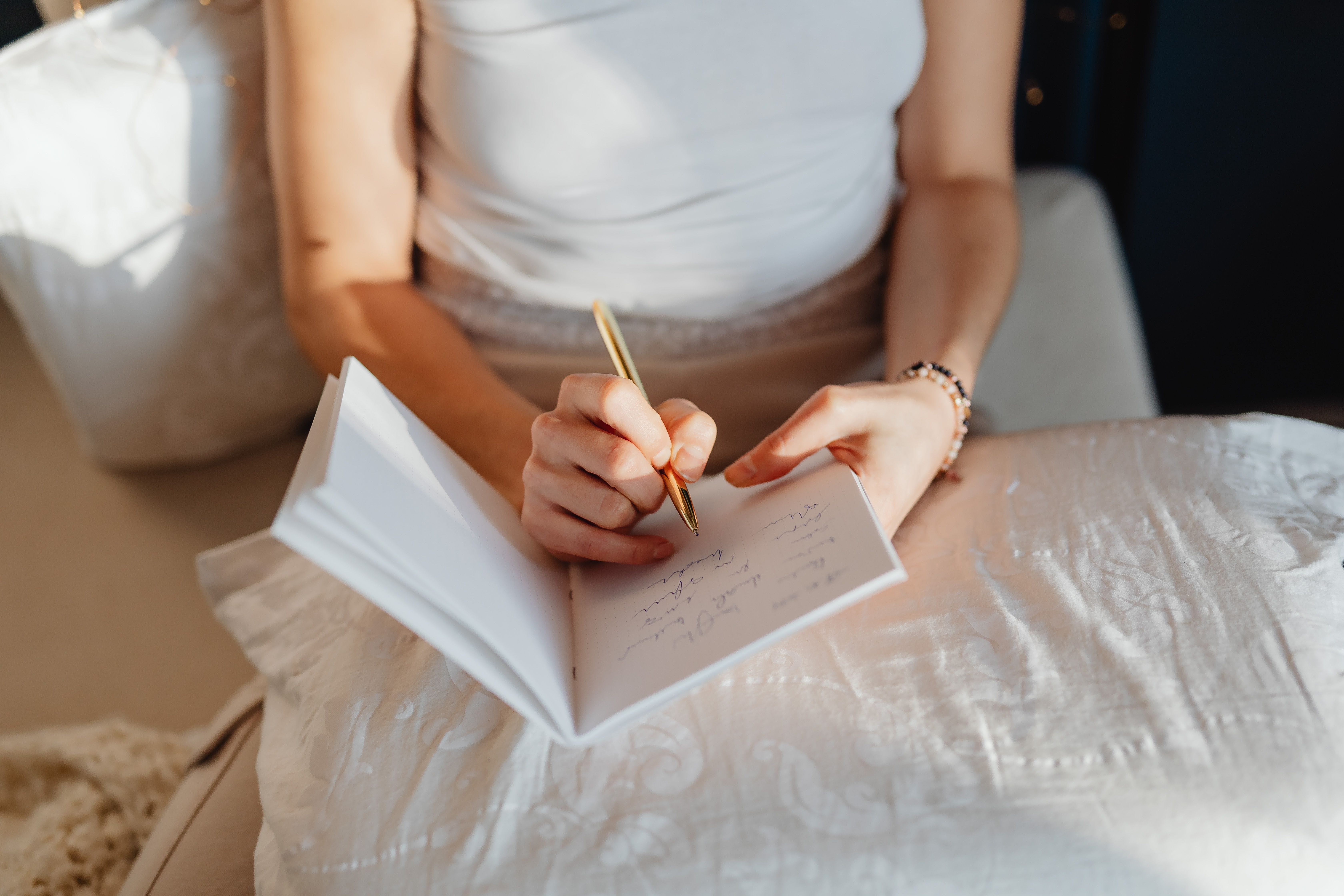
The actual return to writing happened almost by accident. I was recovering from knee surgery, sore and restless, and looking for something to fill the hours. I started reading essays on Substack, and it hit me: this was Instagram, but written. Same impulse to share a life in real time, just built out of sentences instead of photos. So, I wrote one about me. I called it “I’m Just a Girl From New York,” and it wasn’t strategic or planned; it was just my story, finally somewhere. Writing it felt like exhaling. I thought I was writing my way through a physical recovery. I didn’t realize until later that I was writing my way through some other things too.
Here’s what stuck with me most, though. When I sat down to write that first piece, I didn’t hesitate. I didn’t feel rusty or unsure, the way you’d expect after decades away. It felt like picking up a conversation exactly where I’d left it off, as no time had passed at all. The ideas didn’t trickle back. They flooded. And I haven’t stopped since.
I used to think midlife would mean becoming someone new, reinventing myself into a different woman entirely.
Turns out that’s not what happened at all. I didn’t become anyone new. I came back to her. I just spent thirty years convinced I’d have to grow into someone else to matter.
Barbara, the writer, was always there.
She was a little girl filling notebooks after school.
She was a teenager writing in her diary.
She was the mother leaving letters for her children.
She was a psychologist listening carefully to other people’s stories.
She never disappeared.
Life simply got louder.
Maybe that is what becoming really is.
Not turning into someone new.
Not waiting for permission.
Maybe it’s remembering the parts of yourself that never really left.
I used to think I was waiting to become a writer.
Now I know I was only waiting to remember I already was.
Still becoming.
