

I became a school psychologist because I wanted to work with children. I wanted to do the quiet work. The real work. The kind that happens when a kid finally feels safe enough to tell you the thing they have never told anyone. What I did not anticipate was everything else.
The paperwork, the documentation, and the scheduling. The meetings that fill the calendar so completely that some weeks the actual children, the reason I walked into this building in the first place, feel like a footnote in my own job description.
School psychologists, counselors, and learning consultants are what I have come to think of as the invisible infrastructure of a school district. We are rarely in the headlines. We do not receive the recognition that teachers receive or the authority that administrators hold. We move quietly through the building, tending to the things nobody wants to look at directly.
Feeding families who have no food.
Navigating housing crises that show up as a child’s inability to concentrate in the third period.
Sitting with the scars that children carry through the front door every single morning, five days a week, ten months a year, year after year.
We see everything.
Here is what almost 25 years of seeing everything has taught me.
Children are the most resilient beings I have ever encountered.
Not in the inspirational sense. In the raw, contradictory, sometimes heartbreaking sense that stops you cold and makes you wonder how a human being this small is still standing.
I started in drug and alcohol counseling right out of college. Then, at 24, I became a child protective services worker.
At 24. I walked into homes that no one should have to walk into and sat across from children who had experienced things I could not have imagined before I took that job. I made decisions that affected families permanently. I carried case files home in my mind every single night because there was no way not to.
What I saw in those children, over and over, in the worst circumstances imaginable, was the same thing I have been seeing ever since.
They showed up anyway.
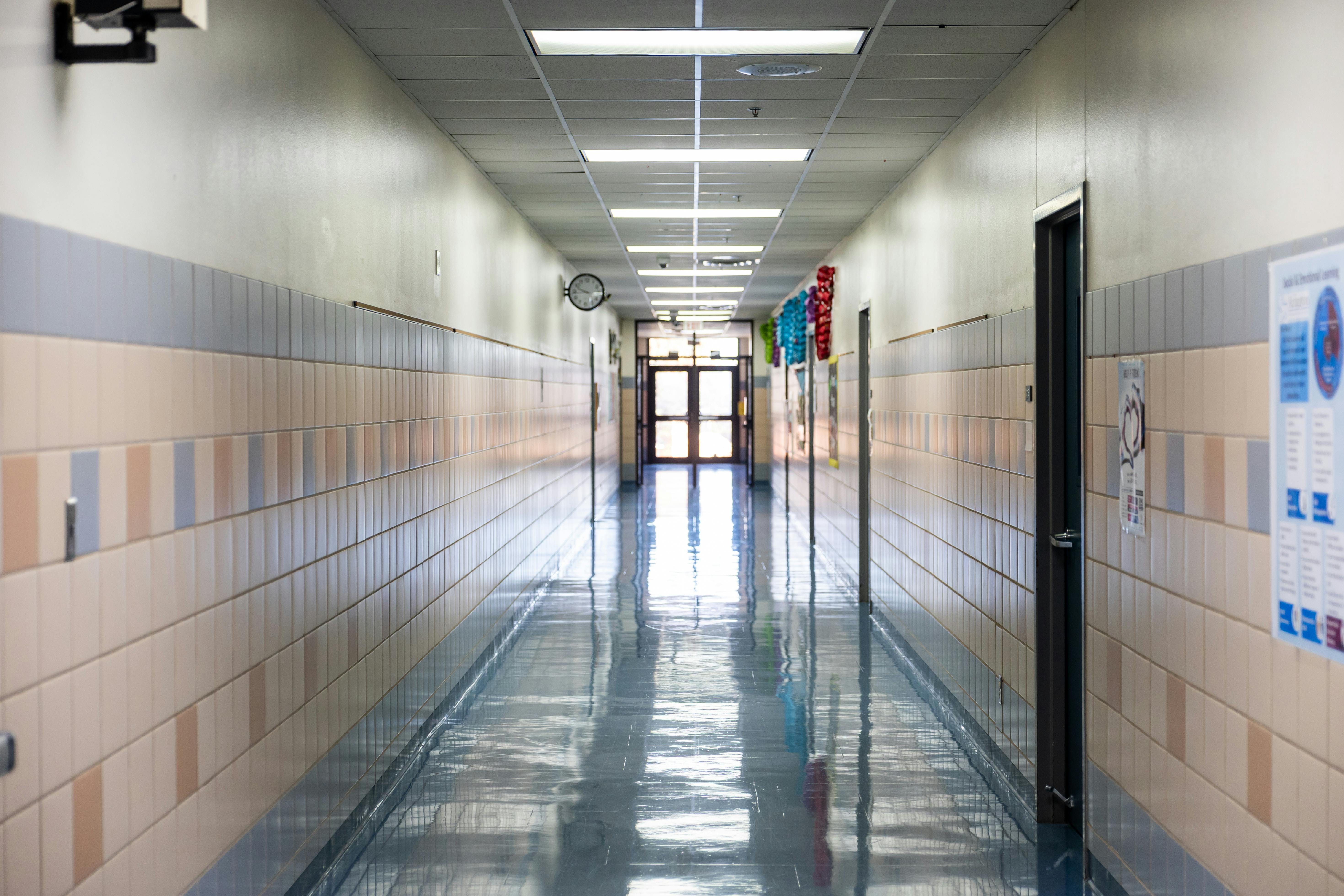
Not because their lives were okay. Not because anyone made it easy. But because something in a child reaches toward survival, connection, and the possibility of better, with a stubbornness that humbles me every single time I witness it.
Child Protective Services taught me that resilience is not something you build in good conditions.
It is something that grows in the dark.
I have never forgotten that. Not in almost 30 years of sitting with children in their hardest moments. That knowledge earned at 24, in homes I still think about, is the foundation of everything I have done since.
When I moved into schools and school psychology, I brought all of it with me.
I have sat across from kids carrying trauma that most adults would collapse under. Children living in chaos, violence, and neglect, and they still show up. Every morning. They walk through those doors, find their seats, and try. Not all of them. Not every day. But enough. Enough to make you believe in something you cannot fully name.
Trauma and potential are not mutually exclusive. That is the thing that still amazes me after all these years.
A child can be an absolute wreck internally; dysregulated, scared, grieving something they do not even have language for yet, and simultaneously be reaching for something better. Reaching for the adult who will notice. Reaching for the future, they can almost see from where they are standing.
The younger kids, especially. They have not hardened yet, and they still want to please adults, especially their teachers. They still believe, in some deep unbroken part of themselves, that adults are safe and that effort is rewarded, and that tomorrow might be different from today.
I have spent years trying to be worthy of that belief.
Here is the honest part about how we talk about kids in schools. We are very good at finding what is wrong. We have built entire systems around the problems: classification, diagnosis, intervention, and documentation. Some of those do genuinely matter. The right support at the right time can genuinely change a child’s life. I have seen it happen and been part of the process.
But, somewhere in all the identifying and categorizing, we sometimes forget to ask what is also right.
I have worked with a boy who could not sit for forty minutes to save his life, but put something in front of him that he actually cared about, and he would not move for six hours. I have worked with a girl whose anxiety made school unbearable, who also happened to read people with a depth and accuracy that most adults never develop. I have worked with a boy who was labeled a behavior problem for two years before anyone figured out that he could not read and had been hiding it every single day because he was terrified, and nobody had thought to look.
The diagnosis tells you something is real. It does not tell you everything.
What I have seen over 30 years is this: the same diagnosis, in the hands of different adults, produces completely different outcomes. One child gets handed a label like a verdict. Another child gets handed the same label as information — here is how your brain works, here is what we can do with that information, and builds something nobody expected from there.
The difference is rarely the child.
It is the adult in the room, and what that adult decided to see first.
The hardest part of this work is something nobody in education says plainly enough.
For young children, almost nothing is within their control. They live where their parents live. Eat what their parents provide or don’t provide and wake up inside whatever emotional environment their family has created, and they carry all of it through the front door of the school building every single day.
Most parents are doing their best with what they have. I mean that sincerely. Many of the parents were raised inside the same chaos they are now unintentionally passing on. They love their kids, genuinely, completely, and at times still can’t give them what was never given to them. You cannot pour from an empty cup, and most of these parents are running on empty for a very long time. I have learned to hold both things at once. Compassion for the parent. Fierce, unwavering advocacy for the child.
But some parents are the source of the problem.
That is the sentence nobody in a school building says out loud. We talk about it and use careful language. We say things like “the home environment presents challenges”, or “the family system is under significant stress”.
What we mean is: this child is being harmed by the people who are supposed to protect them, and there is only so much a school building can do about that.
That particular helplessness, knowing something is not right, being limited in what you can change, is the thing that comes home with you. The things you think about at 2 A.M. The child you can’t stop worrying about, even when your “shift” is technically over.
That never gets easier. I don’t think it is supposed to.
A few years ago, I started getting phone calls and messages from former students.
Not a few. Many.
Even students I had worked with in elementary school. Specifically, the ones who had struggled, who had worried me, who I had stayed late for and lost sleep over. They were reaching out to tell me they were okay. They told me something I said or did mattered.
One young man sent me a message that I have read more times than I can count. He told me I was the first adult who made him feel like he was not broken. That I had seen something in him he could not see in himself. He wrote that spending lunch with me during his senior year was the highlight of his high school career.
I remembered him. Of course, I remembered him. How could I forget?
But I had no idea.
You rarely do. Then, something happened that shook me completely.
Students I had known in elementary school, the ones I had worried about, the ones whose files I had carried home in my mind, now have children of their own. Those children are students in my building. Sometimes their parents see me and stop to say hello and thank you.
Over twenty years of showing up in school.
That is what “thank you” looks like.
I am building Midlife Becoming because of everything I have learned over thirty years working with families and children.
The thing that makes a child resilient is exactly the thing that makes a midlife woman resilient. Someone who sees her. Someone who reflects what she cannot yet see in herself. Someone who says, “You are not broken, you are just in a hard season and hard seasons end”.
I have spent my entire career doing that work for children. Now I want to do it for women. Women who are 45, or 52, or 60, and standing in the middle of their own kind of chaos. The women who have been pouring themselves into everyone else for so long they have forgotten what they actually want. Women who are carrying grief and transition and reinvention all at the same time, and wondering if they are doing any of it right.
You are.
The fact that you are still here, still trying, and still reaching for something better? That is not small.
That is the whole thing.
Children taught me that.
Thirty years of watching them show up anyway.
— Barb
Beautiful post ! loved it 💗The line about the difference being the adult in the room, and what that adult decided to see first, that is the whole philosophy right there. I have watched that same thing play out with women navigating major financial transitions. The ones who move forward are almost never the ones with the most resources. They are the ones who had someone reflect a different version of possible back to them. Thirty years of that work is not small. Not even a little.
Thank you for this beautiful piece Barb. Your voice continues to bring beauty and goodness to the world.🤍